Today’s marketing world needs fast, personalized content across many platforms. Many companies handle this by using manual systems like spreadsheets, email threads, and separate tools.
At first, this seems cheap because there’s no big software investment. But over time, manual systems create hidden costs that slow down growth.
These costs include:
- Lost productivity
- Burnout among employees
- More mistakes and risks
- Missed strategic opportunities
In short, teams spend more time managing work instead of creating value.
How Manual Content Marketing Becomes Inefficient

A typical content workflow has several steps:
- Ideation
- Planning
- Creating briefs
- Writing drafts
- Approvals
- Publishing
- Tracking performance
- Auditing
When everything is manual, teams rely on many disconnected tools and constant human coordination. This creates delays and confusion.
Research and Planning Take Too Long
Content teams must research trends, competitors, and keywords.
In manual systems:
- Research is often repeated by different people.
- Data is scattered across tools.
- Teams may spend 12–16 hours per week doing repetitive research.
Planning content also happens in spreadsheets or task tools like Trello or Asana, which don’t connect directly to the content itself.
Brief Creation and Writing Problems
Content managers manually prepare briefs for writers. If even one detail is missing, the writer may produce the wrong type of content.
This causes:
- Multiple revisions
- Wasted time
- Frustration for writers
Writers also spend a lot of time searching for information instead of writing.
Approval Delays
Approvals are one of the biggest problems in manual workflows.
Content usually needs reviews from:
- Editors
- Managers
- Subject experts
- Legal or compliance teams
When approvals happen through email or messages:
- It becomes unclear which version is correct
- Feedback gets lost
- Publishing gets delayed
Content that should take hours to approve can take days or weeks.
The Problem of Constant App Switching
Manual workflows force employees to switch between many tools.
Research shows employees switch between apps around 1,200 times per day.
Each interruption breaks focus. It takes about 23 minutes to fully regain concentration.
Because of this:
- Productivity drops
- Creativity decreases
- Stress increases
Many workers report 45–90 minutes of wasted time daily because of interruptions.
The Financial Cost of Manual Work
Content creators and marketing managers are highly paid professionals.
For example:
- San Francisco: about $60 per hour
- London: about $37 per hour
- Dubai: about $18–$43 per hour
If a marketing lead earning $119,000 per year spends 40% of their time on manual tasks, the company wastes about $47,000 per year on that single employee.
In a team of 50 people, that can reach over $1 million in lost productivity annually.
Strategic Work Gets Ignored
Manual work doesn’t just waste time—it prevents teams from doing important strategic tasks.
Teams often postpone things like:
- Personalization campaigns
- A/B testing
- Customer journey automation
- Data analysis
Instead of improving marketing performance, teams are stuck just keeping things running.
Burnout and Employee Turnover
Manual systems increase stress.
Marketing teams already deal with:
- Tight deadlines
- Constant content demand
- Digital overload
When tools are inefficient, burnout increases.
This leads to:
- Employees quitting
- Hiring costs
- Lost experience and knowledge
In fact, 20% of Gen Z employees have quit jobs because of outdated tools.
Errors Can Be Expensive
Manual systems also increase mistakes.
Even small errors can cause big losses.
Examples:
- A single typo on a website can reduce sales by up to 50%.
- A spelling mistake once caused a company to lose 80% of its customers.
- Legal mistakes or compliance errors can cost millions in fines.
Manual processes make these risks more likely.
Manual Systems Don’t Scale
Manual workflows might work for 10 pieces of content per month.
But when a company grows and needs 100 pieces per month, the system breaks.
To scale manually, companies must hire more people, which increases costs and complexity.
Automation allows companies to grow without constantly increasing headcount.
The Benefits of Automation
Marketing automation tools can dramatically improve efficiency.
Companies using automation report:
- 80% time savings in campaign management
- 129% more leads after one year
- 36% more deals closed
- 14.5% higher sales productivity
On average, marketing automation returns $5.44 for every $1 spent.
How AI Is Changing Content Marketing
AI tools can now help with:
- Content research
- Draft creation
- Personalization
- Data analysis
- Content repurposing
Tasks that used to take hours can now take minutes.
AI also allows marketers to personalize content up to 50 times faster than manual workflows.
Conclusion
Manual content marketing may look cheaper at first, but the hidden costs grow quickly.
Over time it leads to:
- Lost productivity
- Employee burnout
- More errors and reputational risk
- Missed opportunities for growth
Automation and AI remove repetitive work so marketing teams can focus on strategy, creativity, and delivering real business impact.
As content demand continues to rise in 2026 and beyond, the companies that succeed will be those that replace manual workflows with smarter, automated systems.
A Smarter Way Forward: Meet Wordiva
Manual content marketing isn’t just inefficient—it limits how fast your business can grow. When teams spend hours on research, approvals, formatting, and coordination, they lose time that should be spent on strategy and creativity.
That’s where Wordiva comes in.
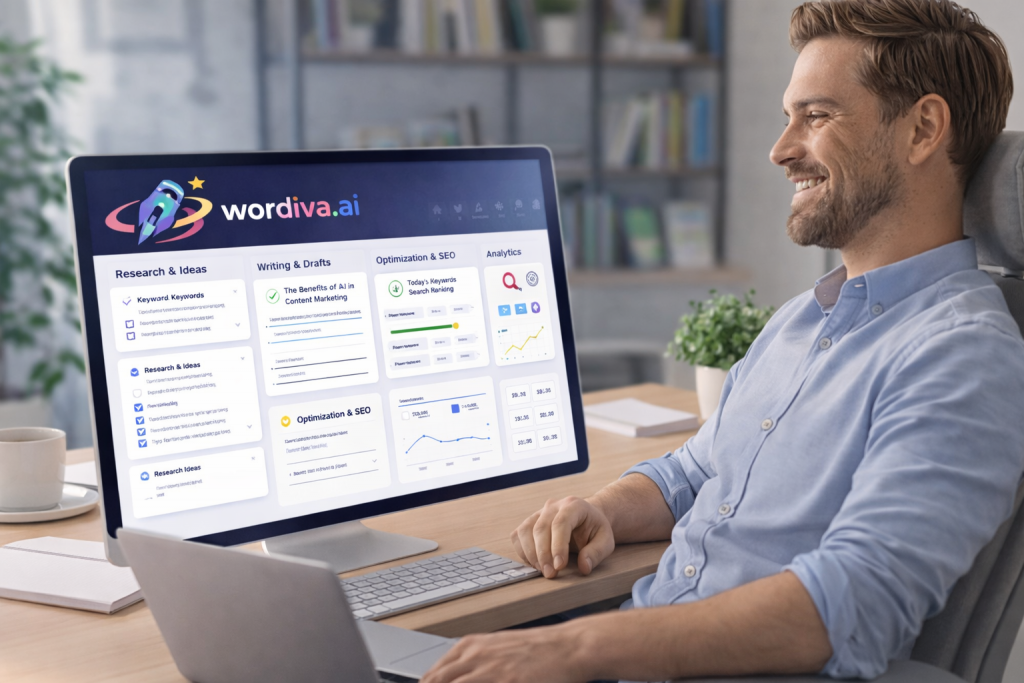
Wordiva is designed to replace scattered tools and manual workflows with a single intelligent content engine. Instead of juggling spreadsheets, email threads, and disconnected apps, teams can manage the entire content lifecycle in one place.
With Wordiva, you can:
- Research in seconds – AI gathers trends, keywords, and insights automatically.
- Generate structured briefs instantly – Turn ideas into clear content plans without manual work.
- Create content faster – AI-assisted drafting helps writers move from blank page to publish-ready content quickly.
- Simplify collaboration – Built-in approvals eliminate long email chains and version confusion.
- Publish across channels – Manage and distribute content from one platform.
- Measure performance instantly – Real-time analytics show what’s working and where to optimize.
The result is simple: less time managing content operations and more time driving growth.
Instead of treating content marketing as a manual production line, Wordiva helps teams run it like a scalable, intelligent system.
The Bottom Line
The hidden cost of manual content marketing is real—but it’s also avoidable.
Teams that adopt smarter tools can move faster, produce better content, and scale their marketing without burning out their people.
If your team is still managing content with spreadsheets, folders, and endless approvals, it might be time to upgrade the system.
Start creating content the smarter way with Wordiva.